Showing posts with label 391.1-Food Consumption. Show all posts
Thursday, April 25, 2019
Sauerkraut and jalapeño on vegetarian burger
For years, I restricted myself to eating burgers that are “plain and dry,” so I thought I’d share news of notable progress via the food-chaining route. Here’s a vegetarian burger patty, paired with Dave’s Killer Bread. To it, I added sauerkraut and slices of jalapeño. These added items are cold (a long-standing problem texture for me), but the warmth of the heated vegetable patty and the toasted bread enfold them and reduce their intensity. I trace this progression from being able to select ingredients at a build-your-own sandwich franchise. I would ask that wait-staff heat those toppings along with the bread and the protein.
Saturday, April 20, 2019
Round Table’s ‘Gourmet Veggie’ without cheese
Aaah ... pizza! We love Round Table’s Gourmet Veggie: artichoke hearts, zucchini, spinach, mushrooms, garlic, and red and green onions on a Creamy Garlic Sauce. We leave-off tomatoes on my half, and add Jalapeños to the entire pizza. But the most important modification we make is to completely omit cheese. I really cannot emphasize this enough, which is why it bears repeating: We love pizza, but eating so much cheese always made us feel horrible afterward. And without the cheese, we find all the other flavors so much richer and more fully enjoyable.
Salsa verde, eaten cold
If you‘re familiar from past entries with my sensory history, you‘ll understand what a triumph in food-chaining it is for me to dip a corn chip in salsa verde. The idea with “food chaining” is to start with a food considered “safe” by the problem eater and then slowly introduce foods with a similar taste, temperature, or texture. The eater progresses from a food considered safe to the final “target” food. In this case, the food problem I’ve been addressing is an aversion to cold, clammy textures. No, this does not mean I am now desensitized to all foods that are cold and clammy. But I like to savor what feels, to me, like a moment of victory.
Saturday, February 9, 2019
Making pizza at home
Spent our Friday evening making pizza at home. We used many of our favorite pizza ingredients: Olives! Two types of peppers! Zucchini! Chopped-up mushrooms! Broccoli! One thing notably absent from our masterpiece was any type of cheese. We love a pizza heaped with veggies, but we hated the bloated, even “icky” feeling that eating the cheese left us with. Lately, we’ve asked to “Hold the cheese” at the local pizzeria. The result is an even more flavorful presentation for all the other ingredients. Talk about “addition through subtraction!”
Monday, July 3, 2017
Smoothies mitigate difficulty eating fruits and vegetables
All my life, I’ve struggled with eating food that had the wrong taste, appearance, color or texture. In extreme duress, eating the “wrong” food could make me retch or gag.
More frequently, but perhaps more damaging, I faced condemnation and ridicule because of my limited diet.
Eating fruits and vegetables is where I particularly struggle. There’s something about this food that is difficult for me to handle.
Fortunately, we know that the way food is prepared can drastically change its “eatability.” When cut raw, tomatoes are grotesque and slimy. But what a difference to eat sun-dried tomatoes on pizza or in pasta, with a smooth creamy marinara sauce.
More frequently, but perhaps more damaging, I faced condemnation and ridicule because of my limited diet.
Eating fruits and vegetables is where I particularly struggle. There’s something about this food that is difficult for me to handle.
Fortunately, we know that the way food is prepared can drastically change its “eatability.” When cut raw, tomatoes are grotesque and slimy. But what a difference to eat sun-dried tomatoes on pizza or in pasta, with a smooth creamy marinara sauce.
Sunday, June 11, 2017
Flavor Bible, essential resource for researching new foods
I rely on “food chaining” to help with my transition from foods that are familiar and comfortable, but what about those foods and ingredients that I know nothing about?
Tactile sensitivities related to food taste, temperature and texture, make trying new things difficult. As a risk-averse person who wants to know ahead-of-time if new foods are “safe” to try, I find the idea of The Flavor Bible to be very empowering.
Written by Karen Page and Andrew Dornenburg, The Flavor Bible (Little, Brown and Company, 2008) offers an alphabetized listing of foods and ingredients with essential details about taste.
Page and Dornenburg explain that many factors go into the experience of flavor: these are taste, “mouthfeel” (temperature and texture), aroma and the “X Factor,” which they describe as the emotional response to food. “When we are present to what we are eating,” they say, “food has the power to affect our entire selves.”
Tactile sensitivities related to food taste, temperature and texture, make trying new things difficult. As a risk-averse person who wants to know ahead-of-time if new foods are “safe” to try, I find the idea of The Flavor Bible to be very empowering.
Written by Karen Page and Andrew Dornenburg, The Flavor Bible (Little, Brown and Company, 2008) offers an alphabetized listing of foods and ingredients with essential details about taste.
Page and Dornenburg explain that many factors go into the experience of flavor: these are taste, “mouthfeel” (temperature and texture), aroma and the “X Factor,” which they describe as the emotional response to food. “When we are present to what we are eating,” they say, “food has the power to affect our entire selves.”
Friday, June 9, 2017
Eating can be one of toughest challenges
Eating is easily the most difficult sensory task for this woman on the autism spectrum. Risking unfamiliar tastes and textures, trying new food takes time and fortitude.
Monday, May 29, 2017
Olive pitter, a gourmand's essential product
I'm unabashed in my enjoyment of olives -- I'd gladly eat them every day -- and recent adventures have led to intact olives served in restaurants and "olive bars." As a serious connoisseur, I wanted to cleanly and easily remove the olive pit.
My quest for optimized olive-enjoyment led to the Squeeze2Pit olive and cherry pitting tool. It arrived attractively packaged in a lavish presentation box with foam-padding interior.
The classy presentation earned high marks, and the tool itself is more than worth the investment.
Upon first trying it, I found the pitter very easy to use. The grip handles offer good leverage for effectively removing the pit with very little exertion. The pit ejects cleanly with little-to-no skin and pulp, and I'm left with a freshly-pitted olive that I can then enjoy.
My quest for optimized olive-enjoyment led to the Squeeze2Pit olive and cherry pitting tool. It arrived attractively packaged in a lavish presentation box with foam-padding interior.
The classy presentation earned high marks, and the tool itself is more than worth the investment.
Upon first trying it, I found the pitter very easy to use. The grip handles offer good leverage for effectively removing the pit with very little exertion. The pit ejects cleanly with little-to-no skin and pulp, and I'm left with a freshly-pitted olive that I can then enjoy.
Wednesday, February 8, 2017
Thin Bins, collapsible food containers that fit in a pocket
Compact storage is important when you a) travel by bicycle or on-foot and b) want to bring your own take-out containers to combat wasteful restaurant practices of too-large, disposable boxes.
Friday, February 3, 2017
Too much box for these left-overs
| Seriously? |
Among wasteful and ridiculous practices associated with dining out: was it really necessary for three tiny slices of pizza to be packed in such an enormous box? This is why we’ve placed an order for reusable, collapsible, easy-to-carry containers. No more depending-in-vain upon restaurant wait-staff to responsibly select our containers (which are still, ultimately, disposable).
Wednesday, December 28, 2016
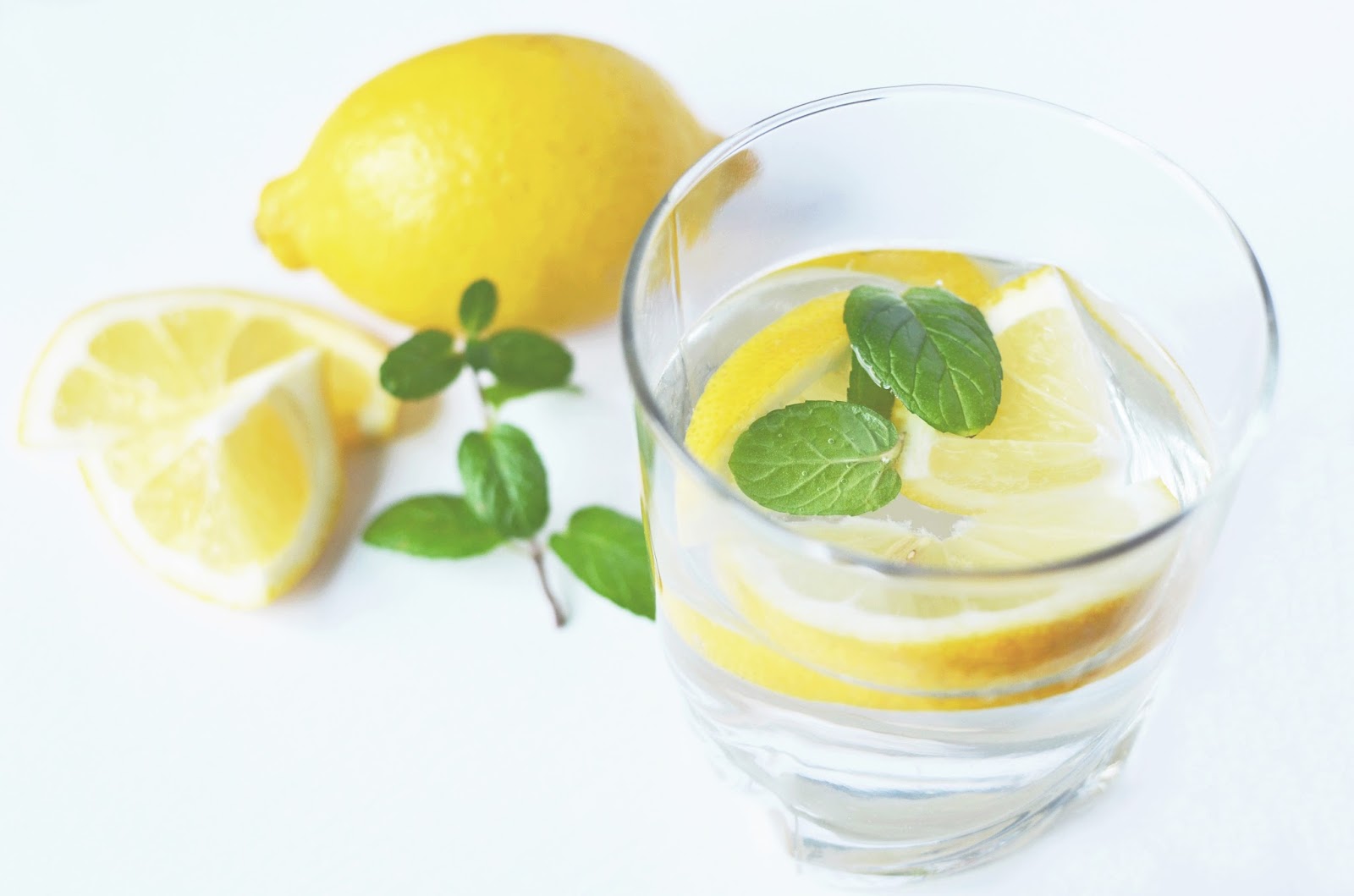
Can’t we just enjoy water?
![]() |
| Source of image: Pexels, under Creative Commons Zero Universal (CC0 1.0) license |
On Friday afternoon, walking around Medford, Ore., we stopped in at a local eatery. From experience, we knew that if we didn’t speak up immediately, water glasses would be deposited on our table, and those glasses would be clogged with ice. So we quickly told our server, “We’d like water with no ice.”
Sunday, April 17, 2016
Diagnostic ‘labels’: Don’t be so quick to discard
From blogger Gail Forsyth-Vail writing at Beacon Broadside, I learned about an argument by Enrico Gnaulati, for removing children’s diagnostic “labels.” By briefly sharing my background, I hope to explain why this idea makes me uncomfortable.
When I grew up, I was painfully aware that I was not like other people. It was continually made evident by classmates who taunted and rejected me.
From kindergarten onward, I was a school-wide outcast.
Adults condemned me as a picky eater, because I could not tolerate certain foods. On one occasion, a babysitter tried to force-feed me chocolate cake. My mother actually had to tell this person that I didn’t have to eat cake if I didn’t want it (because a clamped-shut mouth and pulling away in revulsion were not accepted as communication). My mother found me, face smeared with the cake that the sitter tried to force on me.
When I grew up, I was painfully aware that I was not like other people. It was continually made evident by classmates who taunted and rejected me.
From kindergarten onward, I was a school-wide outcast.
Adults condemned me as a picky eater, because I could not tolerate certain foods. On one occasion, a babysitter tried to force-feed me chocolate cake. My mother actually had to tell this person that I didn’t have to eat cake if I didn’t want it (because a clamped-shut mouth and pulling away in revulsion were not accepted as communication). My mother found me, face smeared with the cake that the sitter tried to force on me.
Saturday, July 19, 2014
Validated by fact that ‘Food Chaining’ is a thing
“Validation” would be my choice if I had to name my feelings reading this statement by Loree Primeau, PhD: “Since feeding involves all sensory systems (sight, smell, sound, touch, and taste), eating is the most difficult sensory task that children face.”
Eating continues to be the most difficult sensory task for this woman on the autism spectrum.
To expand my palate, my husband and I take an approach very similar to the “food chaining” discussed by Primeau at Aspergers101.
It takes time for me to get used to an unfamiliar food, and it requires considerable fortitude to be willing to try new things. An experience that is already fraught with challenges on the basis of unfamiliar or unpleasant tastes or textures is further burdened by past experiences and prevalent social attitudes.
Eating continues to be the most difficult sensory task for this woman on the autism spectrum.
To expand my palate, my husband and I take an approach very similar to the “food chaining” discussed by Primeau at Aspergers101.
It takes time for me to get used to an unfamiliar food, and it requires considerable fortitude to be willing to try new things. An experience that is already fraught with challenges on the basis of unfamiliar or unpleasant tastes or textures is further burdened by past experiences and prevalent social attitudes.
Wednesday, May 29, 2013
Sweeter food is less good for you
To personal distaste, add health concerns among reasons to resist the tyranny of sweetness. According to Jo Robinson writing for the New York Times Sunday Review, farmers have bred nutrition out of food in a quest for sweeter flavors.
“The more palatable our fruits and vegetables became, however, the less advantageous they were for our health.”
Robinson recommends selecting corn with deep yellow kernels, cooking with blue, red or purple cornmeal, arugula, scallions and fresh herbs.
“We can’t increase the health benefits of our produce if we don’t know which nutrients it contains. Ultimately, we need more than an admonition to eat a greater quantity of fruits and vegetables: we need more fruits and vegetables that have the nutrients we require for optimum health.”
“Studies published within the past 15 years show that much of our produce is relatively low in phytonutrients, which are the compounds with the potential to reduce the risk of four of our modern scourges: cancer, cardiovascular disease, diabetes and dementia. The loss of these beneficial nutrients did not begin 50 or 100 years ago, as many assume. Unwittingly, we have been stripping phytonutrients from our diet since we stopped foraging for wild plants some 10,000 years ago and became farmers.”The two common themes, according to Robinson, is plants with the most beneficial phytonutrients have a bitter, sour or astringent taste and early farmers favored plants that were low in fiber and high in sugar, starch and oil.
“The more palatable our fruits and vegetables became, however, the less advantageous they were for our health.”
Robinson recommends selecting corn with deep yellow kernels, cooking with blue, red or purple cornmeal, arugula, scallions and fresh herbs.
“We can’t increase the health benefits of our produce if we don’t know which nutrients it contains. Ultimately, we need more than an admonition to eat a greater quantity of fruits and vegetables: we need more fruits and vegetables that have the nutrients we require for optimum health.”
Friday, May 3, 2013
Handmade pouches work great for bulk dry goods
I repurposed these sacks from bandannas and crocheted drawstrings from newspaper-bundling twine. Each pouch has the tare weight embroidered on it.
Combine these handmade dry-goods pouches with handmade grocery sacks and our shopping trips at the co-op are occasions for living the value of sustainability.
Thursday, April 25, 2013
Restaurant staff redeems or aggravates bad customer service
With a sensitive palate, I risk special instructions being disregarded or not carried out. But how staff then handles it, makes a difference to my over-all restaurant experience.
Friday, March 22, 2013
Cooking class idea: Tactile-challenges work around
![]() |
| AFC Education Coordinator Mary Shaw taught a Pantry Basics class on March 20 |
Sunday, February 3, 2013
Blueprint for a Co-op Decade
![]() |
| Interior of the Ashland Food Co-op. Image from Return To Tradition |
As the International Year of Cooperatives neared its conclusion, the International Co-Operative Alliance (ICA) released its Blueprint for a Co-op Decade. As stated by ICA Director-General Charles Gould, “We want to see co-operatives rise to the top of global business as the fastest growing business model by 2012.”
Monday, June 11, 2012
Lake County Community Co-op to offer owner shares
![]() |
| Lake County Community Co-op booth at 2009 Earth Day celebration in Middletown |
The Lake County Community Co-op will begin offering owner shares, “a distinctive feature of cooperative enterprises,” according to publicist JoAnn Saccato.
Tuesday, February 8, 2011
Overwhelming circumstances don’t make me a ‘brat’
On the Café Press website, an entire line of T-shirts and other items serve as proxy advocates with which parents can communicate, “Your parenting suggestions are unwelcome unless you have a child with [fill-in-the-blank].”
Subscribe to:
Posts (Atom)